Deep Cleaning Below the Gumline
When plaque and tartar build up below the gumline, they irritate the surrounding tissue and create small pockets between the tooth and gum. Over time, those pockets deepen, trap more bacteria, and allow the problem to progress toward the bone that holds your teeth in place. Scaling and root planing is a deep cleaning designed to reach that space and clear it out.
At All About Smiles Dentistry in Durant, OK, this treatment is typically recommended after a periodontal evaluation shows pocket depths or gum inflammation that a standard cleaning will not resolve. The goal is to remove what is causing the irritation and give your gums the chance to reattach and heal.
Schedule a Gum EvaluationWhy Some Patients Need More Than a Standard Cleaning
A routine cleaning removes plaque and surface tartar above the gumline, which works well for gums that are healthy or only mildly inflamed. Once tartar has built up below the gumline and pockets have started to form, a surface-level cleaning is no longer enough to reach the source of the problem. Scaling and root planing goes deeper, clearing bacteria and smoothing root surfaces so the gum tissue has a real opportunity to reattach.
Signs You Need Scaling and Root Planing
Your dental team will typically identify the need for this treatment during a periodontal evaluation, but a few signs are worth mentioning at your next visit.
- Gums that bleed easily during brushing or flossing
- Pocket depths of 4 millimeters or more measured at your exam
- Visible tartar buildup along or below the gumline
- Gums that look red, swollen, or tender
- A family history of gum disease
What to Expect During Scaling and Root Planing
Treatment is often split into sections of the mouth rather than completed all at once, so nothing feels rushed and you stay comfortable throughout.
Numbing the Treatment Area
A local anesthetic is applied so the section being treated stays comfortable throughout the appointment.
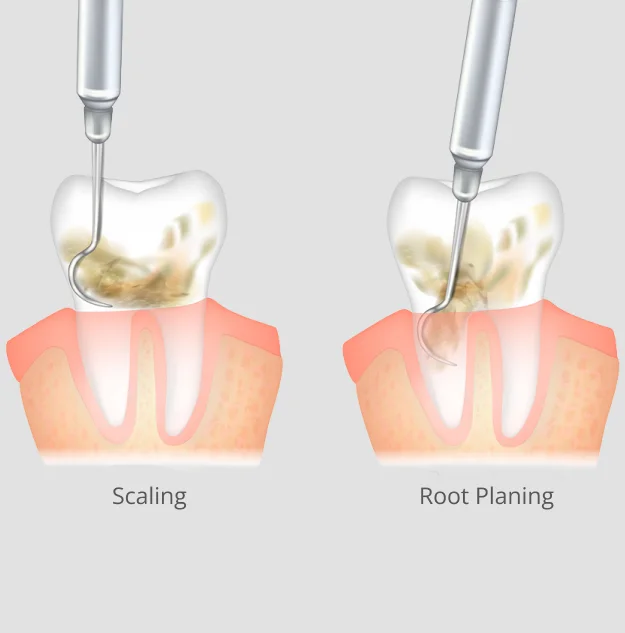
Scaling
Plaque and tartar are carefully removed from the tooth surface and from below the gumline, where a standard cleaning cannot reach.
Root Planing
Rough spots on the root surface are smoothed out, removing the areas where bacteria tend to collect and making it easier for gum tissue to reattach.
Rinsing and Checking the Area
The treated area is rinsed thoroughly, and pocket depths are checked to confirm the area has been fully cleaned.
Additional Treatment If Needed
In some cases, an antimicrobial treatment is placed directly into deeper pockets to support healing.
Scheduling Your Follow-up
A follow-up evaluation is scheduled a few weeks out to check how your gums have responded.
How Many Visits It Takes
Most patients complete treatment over one or two visits, with the mouth typically divided into sections so each area gets full attention while staying numb and comfortable. How many visits you need depends on how many areas require treatment and how deep the pockets are. Your Durant team will walk you through a specific plan once your evaluation is complete.
Caring for Your Gums After Treatment
Some mild soreness or sensitivity in the day or two afterward is normal and usually manageable with over-the-counter pain relief. Sticking to soft foods and lukewarm liquids for the first day or so helps keep the area comfortable, and a gentle warm salt water rinse can support healing. Brushing and flossing can typically continue as normal, though your team may suggest being extra gentle around the treated areas until they have had time to settle.
Give Your Gums the Deeper Clean They Need
If a recent exam showed pocket depths or gum irritation that a regular cleaning will not resolve, scaling and root planing is often the most direct way to get things back on track. Call our Durant team at 580-924-0660 or request an appointment online, and we will walk you through what your treatment would involve.
Request an AppointmentFrequently Asked Questions About Scaling and Root Planing
A single appointment usually runs about 45 minutes to an hour per section of the mouth being treated, depending on how much area needs attention. Your Durant, OK team will give you a clearer estimate once your evaluation is complete.
The area being treated is numbed beforehand, so most patients feel pressure rather than pain during the appointment. Mild soreness or sensitivity afterward is common and typically fades within a day or two.
A regular cleaning addresses plaque and tartar above the gumline, while scaling and root planing reaches below it to treat pockets and root surfaces that a standard cleaning cannot access. It is a more targeted treatment for gums that show signs of disease rather than routine maintenance.
Most patients complete treatment in one or two visits, with the mouth often divided into sections so each area is treated thoroughly and comfortably.
Soft foods and lukewarm liquids are easiest on treated gums for the first day or so. Very hot, cold, spicy, or crunchy foods are worth avoiding until any initial sensitivity settles down.
Some mild soreness or sensitivity is normal for a day or two after treatment and usually responds well to over-the-counter pain relief. Ongoing pain or swelling beyond a few days is worth a call to our team.
Yes. Along with patients in Durant, we regularly provide scaling and root planing for families from Calera, Colbert, Bennington, and other nearby Bryan County communities.
Many dental insurance plans cover a portion of scaling and root planing when it is recommended based on a periodontal evaluation, though coverage varies by plan. Our team at All About Smiles Dentistry can check your specific benefits before treatment begins.