A Simple Shield Against Cavities
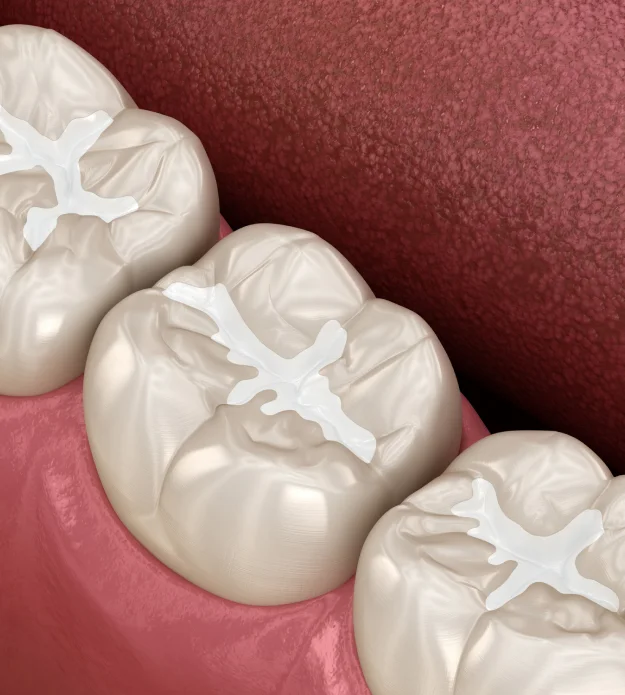
Molars and premolars are covered in tiny pits and grooves that are perfect for trapping food particles and bacteria, and toothbrush bristles often cannot reach all the way into them. Dental sealants are a thin, protective coating painted onto the chewing surfaces of these teeth, sealing out the plaque and acid that lead to cavities. Once applied, a sealant creates a smooth, easy-to-clean surface where deep grooves used to trap everything that touched them.
At All About Smiles Dentistry in Durant, OK, sealants are one of the simplest ways we help patients avoid decay in hard-to-clean areas. The application takes only a few minutes per tooth, requires no drilling or anesthesia, and can protect a tooth for years with proper care. Because the process is so simple, sealants are often added on the same day as a routine cleaning and exam, with no extra visit required.
Schedule a Sealant ConsultationWhy Back Teeth Need Extra Protection
Molars and premolars come in with narrow, uneven grooves already in place, some so tight that a toothbrush bristle cannot fully clean them. Food and bacteria settle into these grooves and stay there, which is part of why the majority of cavities in children and teenagers form on chewing surfaces rather than between teeth. A sealant fills in those grooves so there is nothing left for plaque to hide in.
- Cavities that start where you cannot see them: Deep grooves hide the earliest signs of decay from view during everyday brushing.
- Food and bacteria that never fully rinse away: Some pits are narrower than a single toothbrush bristle, so they stay packed with debris between visits.
- Repeat fillings on the same teeth: Molars that decay once are often the ones that decay again without added protection.
- Weakened enamel from constant acid exposure: Bacteria trapped in a groove produce acid around the clock, wearing down enamel from the inside out.
Who Benefits From Sealants
Sealants are most commonly placed on children and teenagers as soon as their permanent molars come in, typically between ages six and fourteen, since these are the years when new teeth are most vulnerable. Adults with deep grooves and no current decay or fillings in a tooth can benefit as well. During a visit, our team will check whether a tooth is a good candidate before recommending one.
- Children and teenagers with newly erupted six-year or twelve-year molars
- Adults with deep, narrow grooves and no current decay or fillings in that tooth
- Patients with a history of cavities on chewing surfaces despite consistent brushing
- Anyone whose exam shows pits too tight to clean fully at home
What to Expect During Your Sealant Appointment
Placing a sealant is quick and comfortable, usually taking about 15 to 20 minutes for several teeth. There is no need for numbing or drilling, and most patients feel nothing more than a little pressure.
Cleaning the Tooth Surface
Each tooth is polished to clear away plaque and food debris before the sealant is applied.
Preparing and Drying the Tooth
A cotton roll or similar barrier keeps the tooth completely dry, since sealants need a clean, moisture-free surface to bond properly.
Applying an Etching Solution
A mild acidic gel is brushed onto the chewing surface for a few seconds to slightly roughen the enamel, which helps the sealant grip.
Rinsing and Re-Drying
The etching gel is rinsed away, and the tooth is dried again, keeping the surface clean before the sealant goes on.
Painting on the Sealant
A liquid resin is brushed into the grooves and pits of the tooth, flowing into every crevice a toothbrush cannot reach.
Curing the Sealant
A special curing light hardens the resin in seconds, leaving a smooth, durable coating that is ready to chew on right away.
How Long Sealants Last
A properly placed sealant can protect a tooth for five to ten years, though how long it lasts depends on several everyday factors, including diet (especially how often sugary, sticky, or hard foods are eaten), chewing habits like teeth grinding or biting on pens, ice, or fingernails, and how consistently you brush and floss around the treated teeth. We check the condition of your sealants at every routine cleaning and exam, and a sealant can usually be touched up or reapplied if it starts to wear.
Signs a Sealant May Need Attention
Sealants are built to hold up well, but it is worth mentioning to our team if you notice a rough edge, a piece that feels chipped, or a spot that catches floss where it did not before. These small changes rarely mean the sealant has failed completely, but checking them early keeps the tooth underneath fully protected.
- A rough or uneven edge you can feel with your tongue
- A visible chip, crack, or missing piece in the sealant
- Floss catching or snagging in a spot it did not before
- New sensitivity or discomfort in a tooth that has a sealant
Give Back Teeth an Extra Layer of Protection
Sealants are one of the easiest ways to lower the risk of cavities in the teeth that work hardest and are hardest to clean. Call our Durant, OK, team at 580-924-0660 or request an appointment online, and we will let you know whether sealants are a good fit at your next visit. Whether you are scheduling for a child’s new molars or asking about sealants for yourself, we will walk you through the process and answer any questions before we begin.
Request AppointmentFrequently Asked Questions About Dental Sealants
Most sealant appointments take about 15 to 20 minutes, depending on how many teeth are being treated. The process is quick enough to fit into a lunch break or a short visit after school.
No. Placing a sealant does not require any numbing, drilling, or removal of tooth structure, so most patients feel nothing beyond mild pressure. It is one of the most comfortable preventive treatments we offer.
Most children get their first sealants between ages six and seven, when the first permanent molars come in, and a second round between ages eleven and fourteen for the second molars. Our Durant, OK team can check whether your child’s teeth are ready at their next cleaning and exam.
Yes. Any adult with deep grooves in a molar or premolar and no current decay or fillings in that tooth can be a good candidate, especially with a history of cavities on chewing surfaces.
Sealants typically last five to ten years with normal wear, though this varies by patient. We check them at every visit and can repair or replace a sealant if it starts to wear thin.
No. Sealants only protect the chewing surfaces of a tooth, so the sides and between the teeth still need regular brushing and flossing to stay decay-free. Sealants are an added layer of protection, not a replacement for daily care.
Yes. Along with families in Durant, we regularly see patients from Calera, Colbert, Bennington, and other nearby Bryan County communities for sealants and other preventive care.
Many dental insurance plans cover sealants for children at little to no out-of-pocket cost, and some plans extend coverage to adults as well. Our team at All About Smiles Dentistry can check your specific benefits before your visit so there are no surprises.